


[Event Report] Multi-Stakeholder Workshop “Heat-Health Adaptation to Climate Change: From Evidence to Policy Implementation — Building Cross-Sectoral Collaboration” (August 24, 2026)
date : 9/14/2026
Tags: Planetary Health

![[Event Report] Multi-Stakeholder Workshop “Heat-Health Adaptation to Climate Change: From Evidence to Policy Implementation — Building Cross-Sectoral Collaboration” (August 24, 2026)](https://hgpi.org/en/wp-content/uploads/sites/2/01-scaled.jpg)
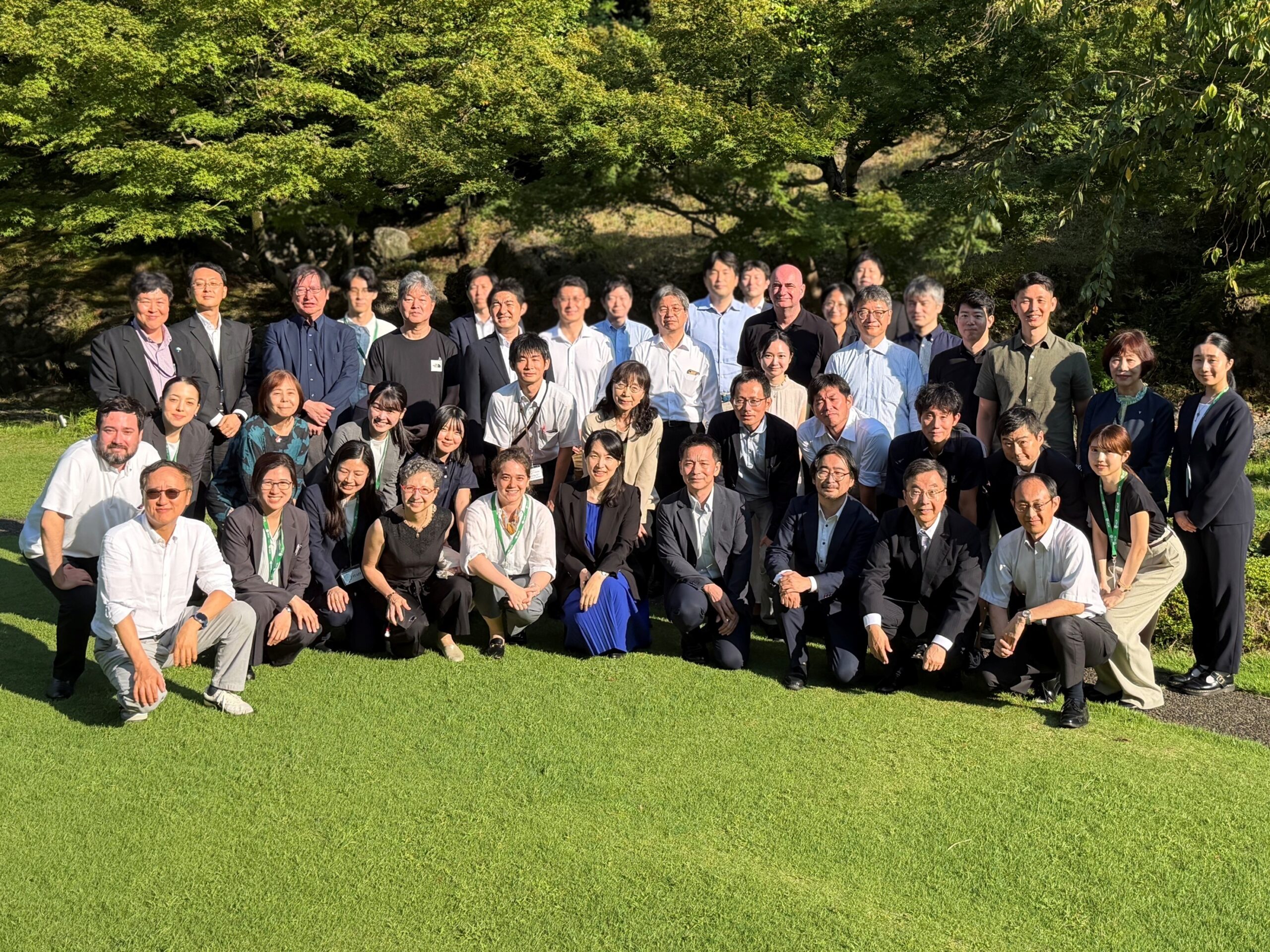
On Monday, August 24, 2026, Health and Global Policy Institute (HGPI) held a multi-stakeholder workshop titled “Heat-Health Adaptation to Climate Change: From Evidence to Policy Implementation — Building Cross-Sectoral Collaboration” at the International House of Japan in Tokyo. The workshop was organized as part of HGPI’s Planetary Health Project, which has been underway since 2022. Approximately 35 experts and practitioners from academia, government, business, and community and home-based medicine, both from Japan and abroad, gathered for a candid, invitation-only discussion conducted under the Chatham House Rule.
As climate change advances, the frequency and intensity of heat waves have been rising worldwide, and the health impacts of extreme heat have become one of the most visible climate-related health risks. In August 2025, Isesaki City in Gunma Prefecture recorded a national all-time high of 41.8°C, and heat-related emergency transports in Japan that year (May–September) reached 100,510, surpassing 100,000 for the first time since records began.
Such extreme heat is understood to arise from the convergence of the long-term global warming trend with natural variability such as the El Niño–Southern Oscillation (ENSO) and the Pacific Decadal Oscillation (PDO). Media reports suggest that 2026 is likely to see a “super El Niño”-level event, further heightening the risk of extreme heat and high humidity. The Japan Meteorological Agency’s introduction, from April 2026, of a new “extreme heat day” category for days reaching 40°C or higher likewise reflects extreme heat becoming a condition society must be continuously prepared for.
The health impacts of extreme heat extend well beyond the acute heatstroke cases captured through emergency transport: under the comprehensive international concept of “Heat-Health,” issues now recognized as important include the worsening of cardiovascular, respiratory, and renal disease, deteriorating mental health, and heat-attributable excess mortality, as well as occupational injuries, productivity losses, sleep disturbances, and structural factors such as “energy poverty” and “indoor heat exposure.” Heat has also been reported to affect not only absenteeism but also presenteeism—reduced productivity among those still at work due to impaired concentration and work efficiency. The International Labour Organization (ILO) likewise positions heat as an occupational health issue affecting workers’ health, safety, and productivity.
A 2025 survey conducted across all 47 prefectures of Japan estimated that about 64.6% of adults aged 20 and over experienced some form of heat-related physical impairment—such as fatigue, sleep disturbance, appetite loss, or dizziness—during the summer of 2024, suggesting that heatstroke cases captured through emergency transport may represent only the tip of the iceberg.
Against this backdrop, there is a growing call, both in Japan and internationally, to move beyond countermeasures focused on summertime heatstroke and update the approach into a more comprehensive, year-round “Heat-Health” framework that accounts for the broader effects of climate change. Building on the achievements to date through heatstroke countermeasures, this workshop took as its starting point a broadening of perspective toward comprehensive Heat-Health, and held discussions along five policy themes: (1) design principles and concept expansion, (2) from alert to action, (3) cross-ministerial governance and positioning heat waves, (4) local implementation and exposure reduction, and (5) the evaluation and improvement cycle and evidence base. In Japan, the government held its first-ever Ministerial Meeting on Heatstroke Countermeasures on July 31, 2026, and is currently advancing discussions to revise both the Climate Change Adaptation Plan and the Heatstroke Countermeasures Implementation Plan—developments with which this workshop is closely aligned. This workshop was organized to bring together stakeholders from government, industry, academia, and civil society for cross-sectoral discussion on these issues.
[Event Overview]
- Date & Time: Monday, August 24, 2026, 13:00–16:00
- Venue: Kabayama–Matsumoto Room, International House of Japan, Roppongi, Minato-ku, Tokyo
- Format: In-person; invitation-only; Chatham House Rule
- Organizer: Health and Global Policy Institute (HGPI)
- Participants: Approximately 35 experts and practitioners from government, industry, academia, and civil society
[Program] (in no particular order; honorifics omitted)
13:00–13:05 Opening and purpose / tone-setting
13:05–13:40 Input Session I: Latest international trends
- Singapore’s implementation knowledge and GHHIN — Jason Kai Wei Lee (Professor, National University of Singapore)
- Korea’s solution cases and an East Asia partnership concept — Ho Kim (Professor, Seoul National University)
- European and multi-country heat-mortality research and international standards for KPIs and evaluation — Aurelio Tobias (Spanish National Research Council)
13:40–14:15 Input Session II: Japan’s current position and evidence base
- What an HHAP is and why it is useful for Japan — Masahiro Hashizume (Professor, The University of Tokyo / Nagasaki University)
- The current position and gaps in the adaptation-plan outline and the Heatstroke Countermeasures Implementation Plan — Kazutaka Oka (Head, Center for Climate Change Adaptation, NIES)
- Institutions and the frontline of community public health — Mitsuya Maeda (Director, Minato Public Health Center)
- Issues emerging from the Heatstroke White Paper — Yosuke Fujisawa (Data Science Officer, Sumitomo Life Insurance Company)
14:15–14:20 Break
14:20–14:55 Group Work, Round 1: Identifying room for development (examining the current Implementation Plan against the HHAP’s eight core elements and the adaptation-plan outline)
14:55–15:15 Frontline-of-implementation relay
- Housing and buildings — Kei Shimonosono (Senior Researcher, National Institute of Public Health), Hiroyuki Uehara (Chair, National Council for Promoting Health and Energy-Efficient Housing)
- Air conditioning and indoor environment — Akinori Yamamoto (Daikin Industries, Ltd.)
- Occupational health — Seichi Horie (President, University of Occupational and Environmental Health, Japan)
15:15–15:50 Group Work, Round 2: Translating into solutions and a 2030 roadmap
15:50–16:00 Plenary sharing, synthesis, and closing
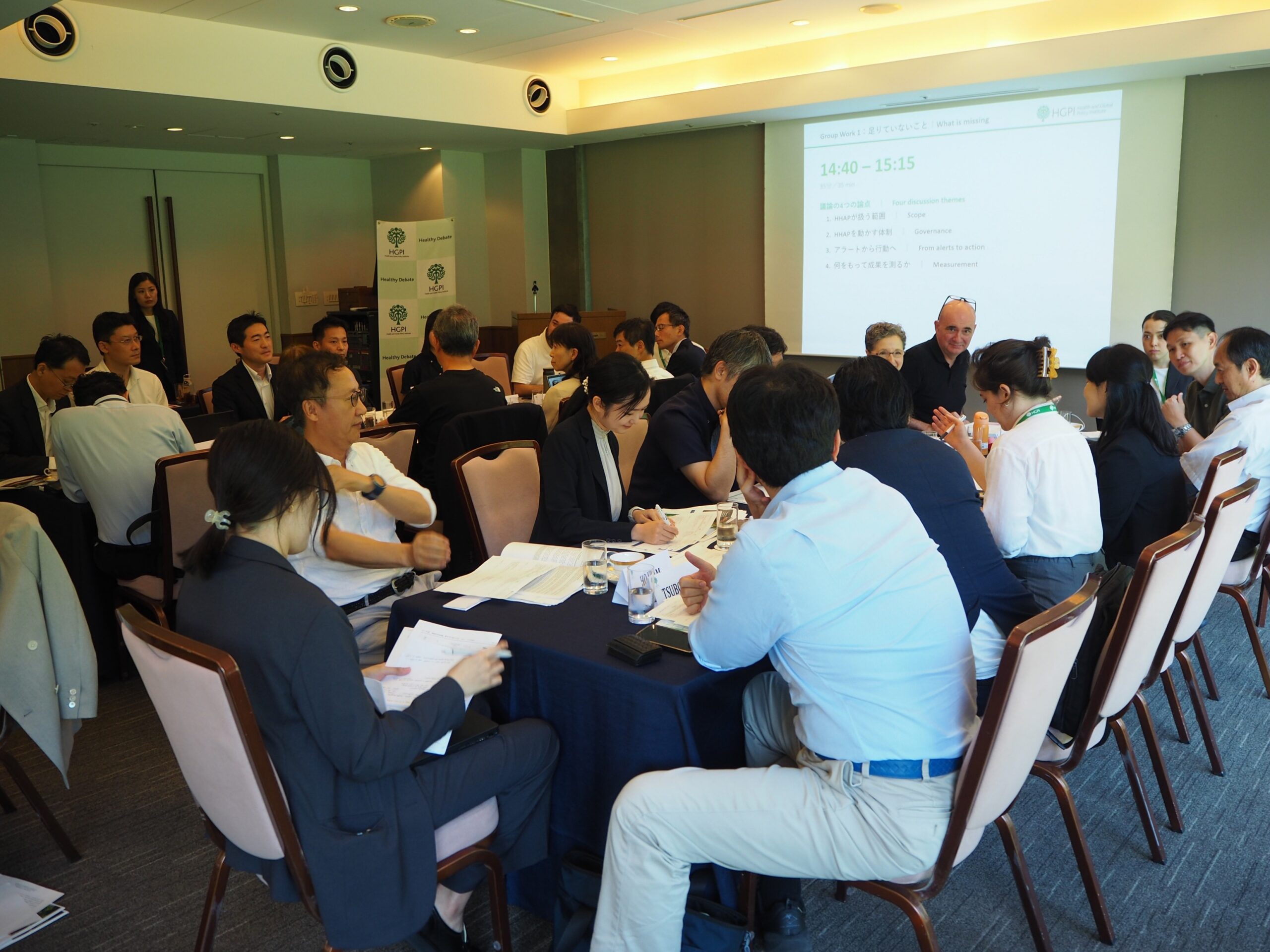
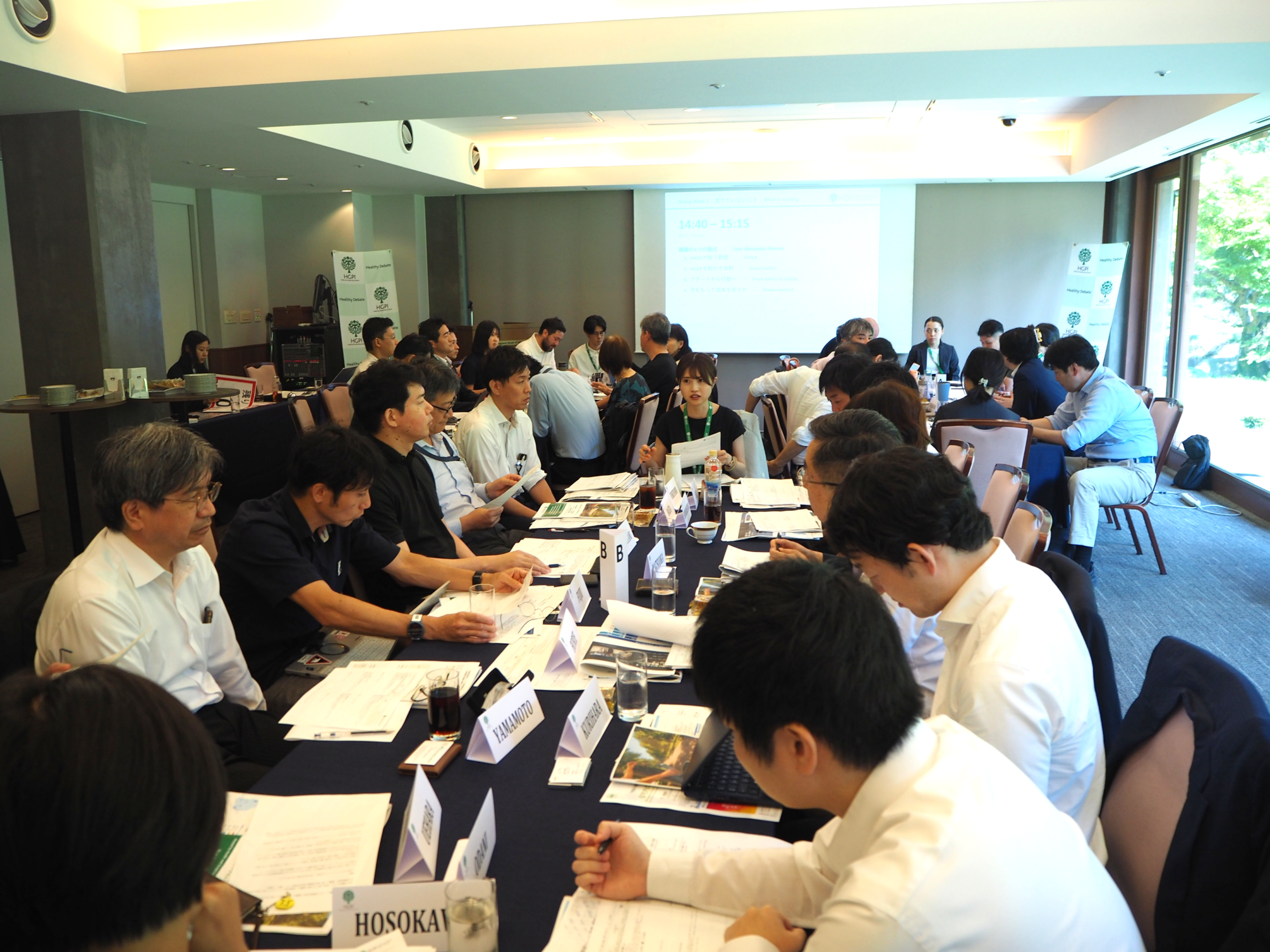
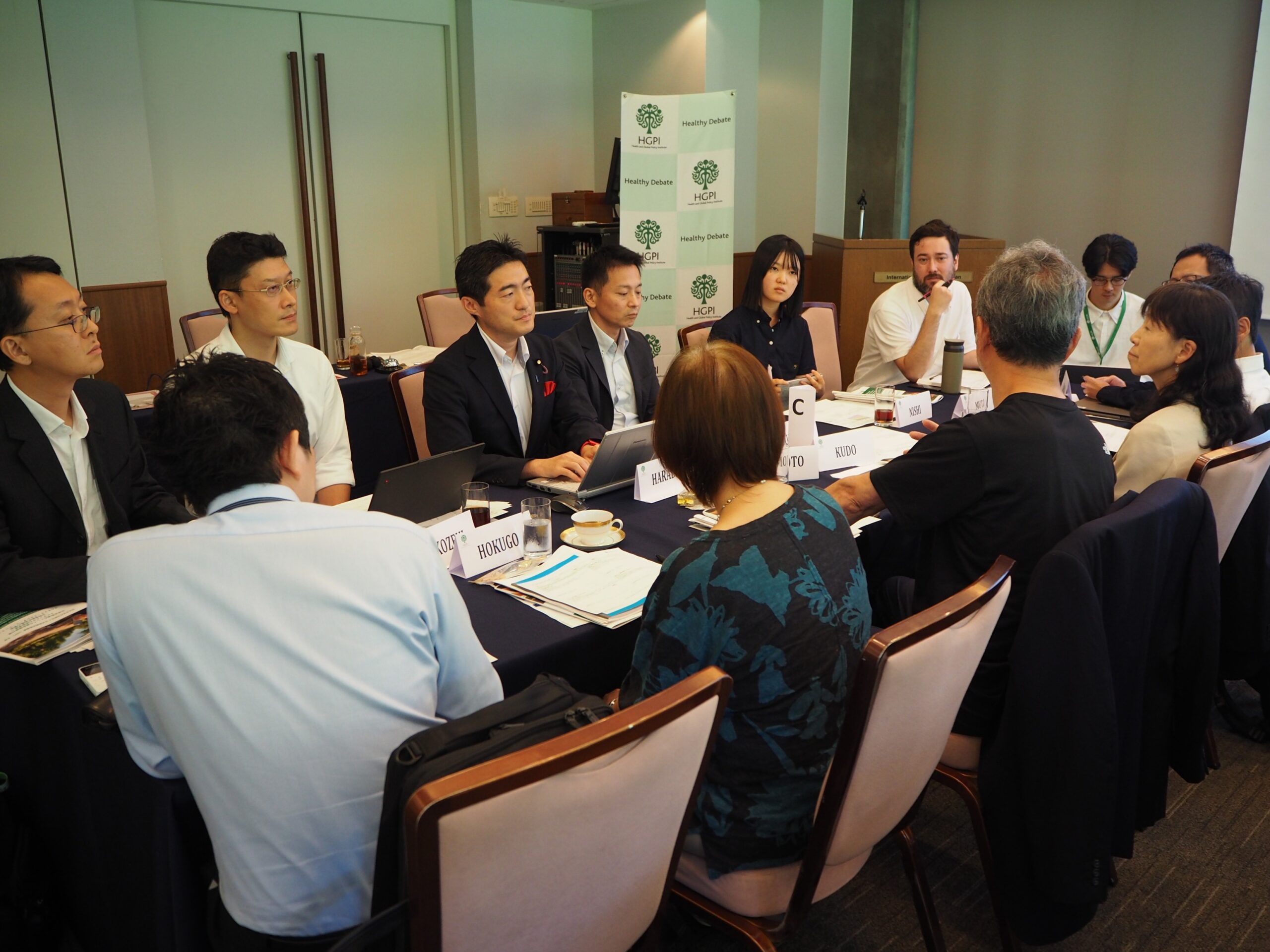
Participants divided into three groups for discussion on issues relevant to implementing a Japanese Heat-Health Action Plan (HHAP). In closing, Masahiro Hashizume offered summary remarks, characterizing the workshop as a first step toward cross-sectoral collaboration and expressing hope for continued dialogue going forward.
 |
 |
 |
HGPI plans to draw on the discussion from this workshop in its ongoing policy advocacy work.
List of Participants (in no particular order; honorifics omitted)
I. Global perspective and the science of “climate change and health” (academia)
- Jason Kai Wei Lee (Professor, National University of Singapore (NUS))
- Masahiro Hashizume (Professor, Graduate School of Medicine, The University of Tokyo)
- Yoonhee Kim (Associate Professor, Graduate School of Medicine, The University of Tokyo)
- Kazutaka Oka (Head, Climate Change Impact Observation Research Section, Center for Climate Change Adaptation, National Institute for Environmental Studies (NIES))
- Aurelio Tobias (Spanish National Research Council (CSIC))
- Ho Kim (Professor, Graduate School of Public Health, Seoul National University)
- Hiroaki Matsuura (Vice President and Executive Director, Shoin University; Chair, WHO Technical Advisory Group on Environment, Climate Change and Health Economics)
II. Science and practice of thermal physiology, sports, and occupational health
- Naoto Fujii (Associate Professor, Faculty of Health and Sport Sciences, University of Tsukuba)
- Yuri Hosokawa (Associate Professor, Faculty of Sport Sciences, Waseda University)
- Seichi Horie (President, University of Occupational and Environmental Health, Japan)
III. Institutions, administration, governance, and law
- Daijiro Harada (Member of the House of Councillors)
- Mitsuya Maeda (Director, Minato City Public Health Center (former Director-General, Environmental Health Department, Ministry of the Environment))
- Tomohiko Makino (Senior Advisor, Minister’s Secretariat, Ministry of Health, Labour and Welfare)
- Akira Shimabukuro (Faculty, Harvard Kennedy School; Adjunct Fellow, HGPI)
- Kenta Minamitani (Attorney, Mori Hamada & Matsumoto; Adjunct Fellow, HGPI)
VI. Housing, buildings, and the indoor environment
- Hiroyuki Uehara (Chair, National Council for Promoting Health and Energy-Efficient Housing)
- Kei Shimonosono (Senior Researcher, Department of Architecture and Facility Management, National Institute of Public Health)
V. Data, surveillance, and insurance (the evidence base)
- Kazunori Odani (Data Intelligence Department, Insurance Division, JMDC Inc.)
- Tomokazu Yokozeki (Executive Innovator, JMDC Inc.)
- Yosuke Fujisawa (Data Science Officer, Sumitomo Life Insurance Company)
- Masahiro Iwamoto (General Manager, Environmental Management Promotion, Sustainability Management Promotion Department, Nippon Life Insurance Company)
- Yurika Osuji (Clinical Specialist, Google LLC)
VI. Air-conditioning and environmental technology
- Akinori Yamamoto (Section Manager, Technology Research, Strategy Office, Technology & Innovation Center, Yodogawa Plant, Daikin Industries, Ltd.)
VII. Nutrition, hydration, and food
- Satoshi Yokoyama (Social Health Relations Department, Nutraceuticals Business Group, Otsuka Pharmaceutical Co., Ltd.)
- Atsushi Kanda (Group Leader, Nutrition Development Group 1, Nutrition Development Research Unit, Research Division, Meiji Co., Ltd.)
- Tomonori Ando (Manager, Frontier Research Section, Future Value Research Department, Central Laboratory, Lotte Co., Ltd.)
- Ana San Gabriel (Senior Adviser, Quality Assurance Department, Ajinomoto Co., Inc.)
VIII. Community and home-based care; vulnerable populations
- Kaori Matsuoka (Executive Board Member, Japan Medical Association (Occupational Health and Environmental Health))
- Shinsuke Muto (President, Tetsuyu Institute Medical Corporation; Vice Chairman, HGPI)
- Masaharu Tsubokura (Professor, Department of Radiation Health Management, Fukushima Medical University)
IX. Weather, information, and behavior change
- Yasuko Kudo (Visiting Professor, Research Institute for Humanity and Nature; Part-time Lecturer, Meiji University)
X. Next-generation and citizen perspective
- Miyuki Hokugo (Senior Staff Writer / Editorial Board Member for SDGs, The Asahi Shimbun)
- Ichika Nishi (1st-year student, Hiroo Gakuen Senior High School)
Observers
- Keisuke Kurihara (Deputy Director, Health Division, Health Service and Environmental Health Bureau, Ministry of Health, Labour and Welfare)
- Junko Saito (United Nations Development Programme (UNDP) Representation Office in Tokyo)
- Subaru Kitanozawa (Director, Health Promotion Division, Minato City Public Health Center (concurrently Director for Regional Medical Care Coordination))
Secretariat
- Joji Sugawara (Vice president, HGPI)
- Eri Cahill (Associate, HGPI)
- Hikaru Sato (Associate, HGPI)
- Gail Co (Program Specialist, HGPI)
- Hinako Iwakura (Program Specialist, HGPI)
- Mako Mihira (Intern, HGPI)
- Tomoka Shimatsu (Intern, HGPI)
- Yuki Hashiba (Intern, HGPI)
Related Posts
-
2026-08-07
[Policy Recommendations] HGPI Supports the Release of a Youth Urgent Statement, “Emergency Youth Statement to Protect Lives and the Future from Extreme Heat: Calling for Climate Action that Leaves No One Behind” (August 7, 2026)
-
2026-09-05
[Public Comment Submission] Public Call for Comments on the Green Bond and Green Loan Guidelines (July 17, 2026)
-
2026-07-03
[In the Media] "Making Heat Health Countermeasures a Pillar of Health Security" (The Nikkei Personal Opinion and Insight, July 1, 2026)
-
2026-06-25
[Activity Report] HGPI Contributed to the Development of the Civil 7 (C7) Global Health Working Group’s Climate and Health Thematic Brief for the G7 (June 25, 2026)
-
2026-06-24
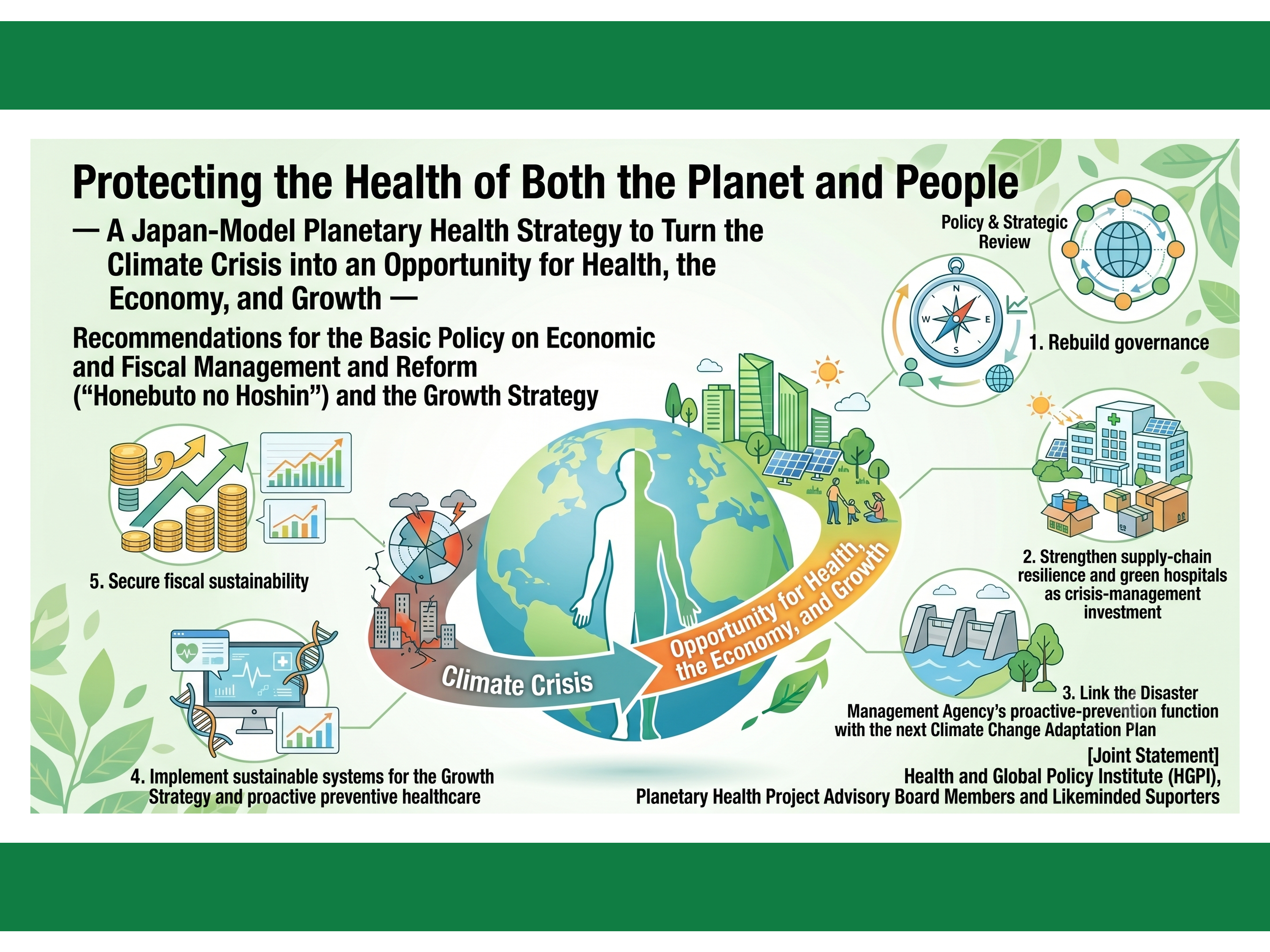
[Policy Recommendations] Joint Statement "Protecting the Health of Both the Planet and People — A Japan-Model Planetary Health Strategy to Turn the Climate Crisis into an Opportunity for Health, the Economy, and Growth" (June 24, 2026)
-
2026-08-07
[HGPI Policy Column] (No.76) - From the Planetary Health Project “No. 19: Heat and Health - The Health Risks of Climate Change and Society's Preparedness”
Top Research & Recommendations Posts
Featured Posts
-
2026-08-05
[Registration Open] (Webinar) The 4th J-PEP Seminar “The History of PPI in Japan and My Own PPI Journey” (September 30, 2026)
![[Registration Open] (Webinar) The 4th J-PEP Seminar “The History of PPI in Japan and My Own PPI Journey” (September 30, 2026)](https://hgpi.org/en/wp-content/uploads/sites/2/HGPI_20260930_The4th-J-PEPseminar.jpg)
-
2026-08-28
[Announcement] The 3rd Kiyoshi Kurokawa Award: Call for Nominations (Deadline: October 1, 2026)
![[Announcement] The 3rd Kiyoshi Kurokawa Award: Call for Nominations (Deadline: October 1, 2026)](https://hgpi.org/en/wp-content/uploads/sites/2/Kiyoshi-Kurokawa-Award_3rd_nominations_eyecatch_caseB_ENG_20260821_v0.4-scaled.png)
-
2026-09-01
[Registration Open] HGPI Salon 2025-2026 Looking Ahead to the Future of Japan’s Social Security System “Session 6: Japan’s Health Policy through the Lens of Global Security” (October 13, 2026)
![[Registration Open] HGPI Salon 2025-2026 Looking Ahead to the Future of Japan’s Social Security System “Session 6: Japan’s Health Policy through the Lens of Global Security” (October 13, 2026)](https://hgpi.org/en/wp-content/uploads/sites/2/HGPISalon2025-20266.png)
-
2026-09-17
[Registration Open] (Webinar) The 145th HGPI Seminar “Toward Better AMR Measures at Elderly Care Facilities—Considering Infectious Disease Control in a Super-Aged Society From a Policy Perspective” (October 27, 2026)
![[Registration Open] (Webinar) The 145th HGPI Seminar “Toward Better AMR Measures at Elderly Care Facilities—Considering Infectious Disease Control in a Super-Aged Society From a Policy Perspective” (October 27, 2026)](https://hgpi.org/en/wp-content/uploads/sites/2/HGPIseminar145.png)
